What is CentOps?
CentOps is an operational map of your entire IT. From one CMDB it calculates the impact on business services – for incidents, changes, patching and costs – including the redundancy of clusters and replication. It is made by Eywo s.r.o., based in Prague.
Who is CentOps for?
For IT operations in regulated organisations: banks and insurers, energy, automotive and manufacturing, the public sector and shared service providers. It is used by CIOs, operations leads, service owners, change managers, security and IT finance.
Which modules does CentOps include?
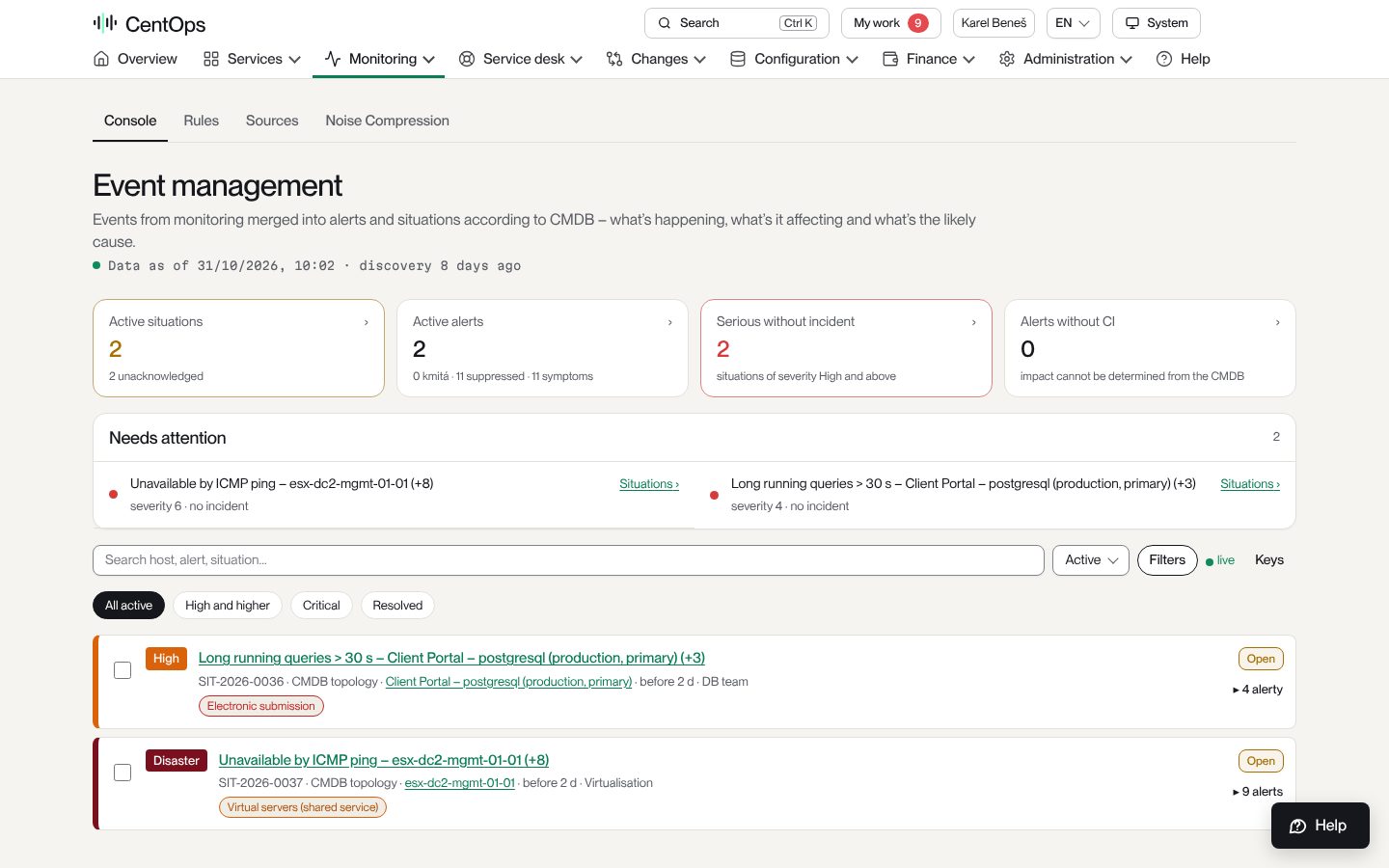
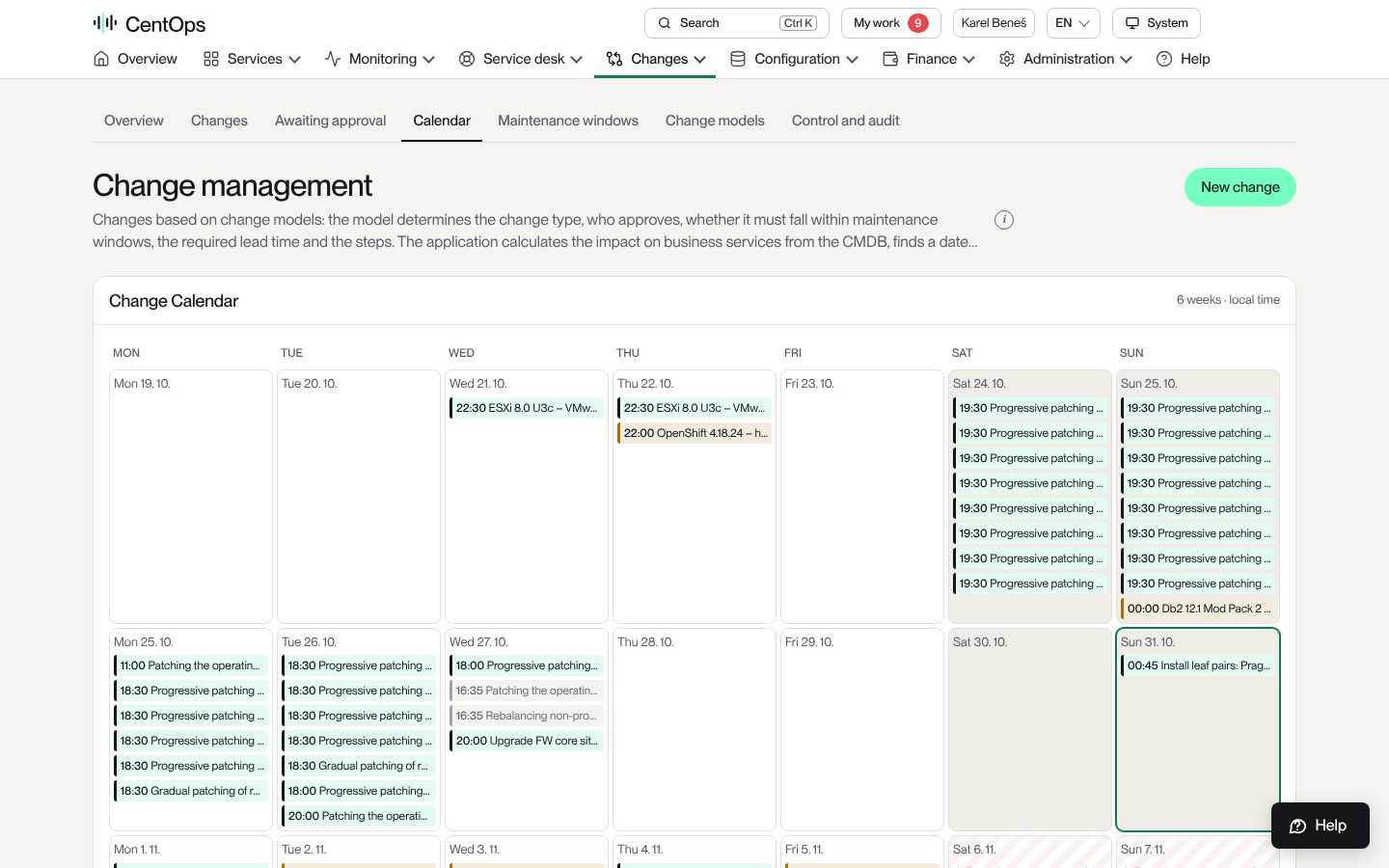
22 modules in six groups: services and configuration (configuration database, dependency map, availability and resilience, data centres), detect and correct (monitoring, incidents, war room, problems, SLAs), request and fulfil (catalogue, IT assets and procurement, licences and spare parts), change and deploy (changes, approvals, patching), strategy and portfolio (enterprise architecture, costs, contracts, rollout roadmap) and governance and security (roles, audit, customer separation). The AI assistant works across modules; all share one set of data.
How is CentOps deployed?
As SaaS operated by Eywo, in your own Cloudflare account, or as a container on your OpenShift. The interface works on mobile too.
How much does CentOps cost?
CentOps is in public beta: free for 6 months for at most 10 companies, with your own instance in the EU and rollout help. After the beta we offer a paid version, or hand over a data export.
Does CentOps do automatic discovery?
Today data arrives through the discovery API (with matching, full synchronisation and retirement), CSV and Excel import, or synchronisation with a primary CMDB. OpenShift inventory (nodes, OpenShift Virtualization, hosted clusters, network and ODF) is imported with a read-only tool. Connectors for automatic collection from vCenter and public clouds are in preparation.